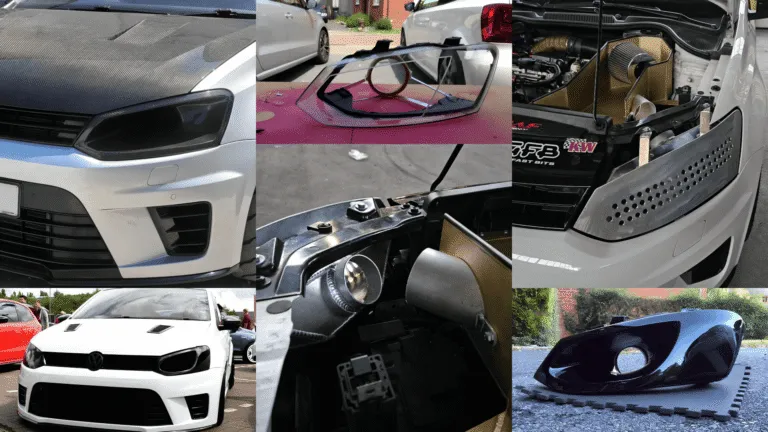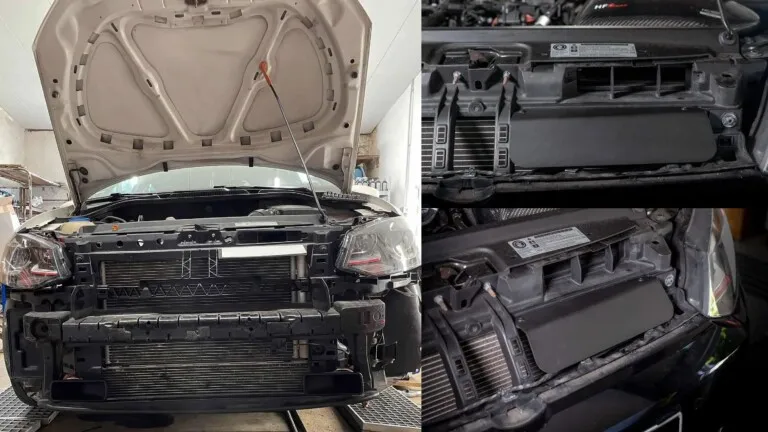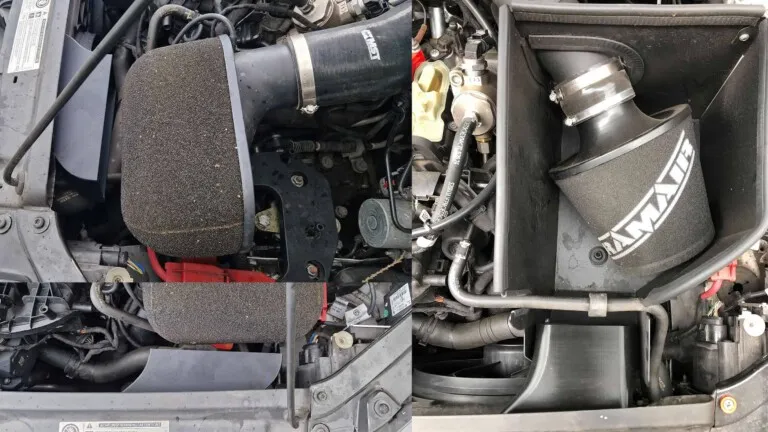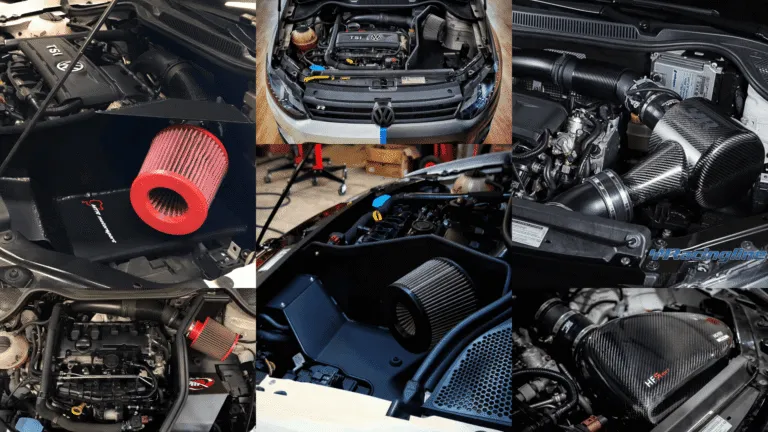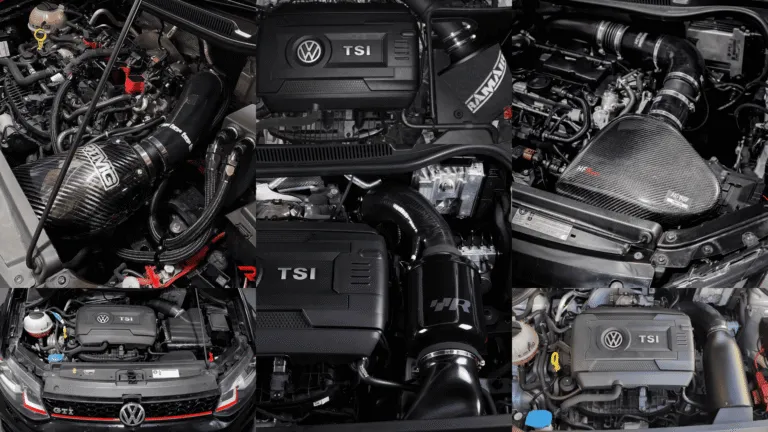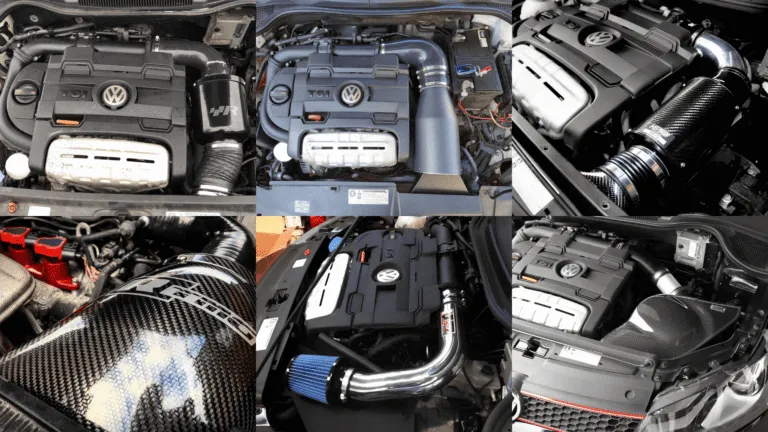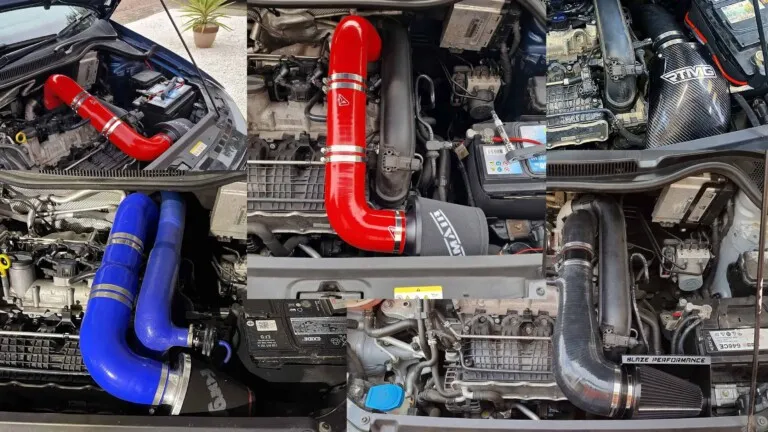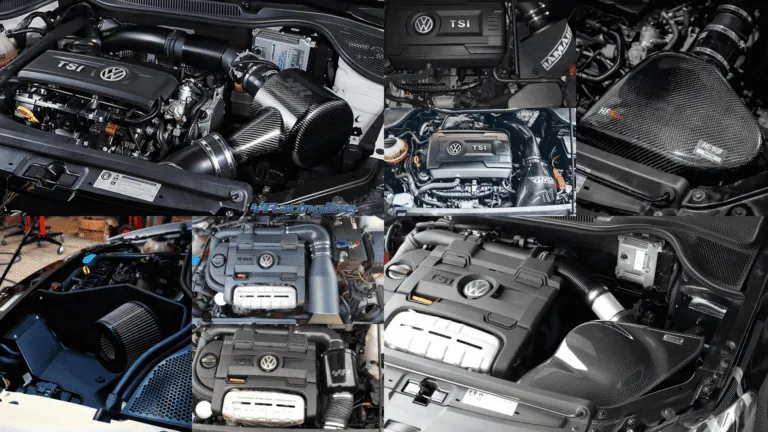
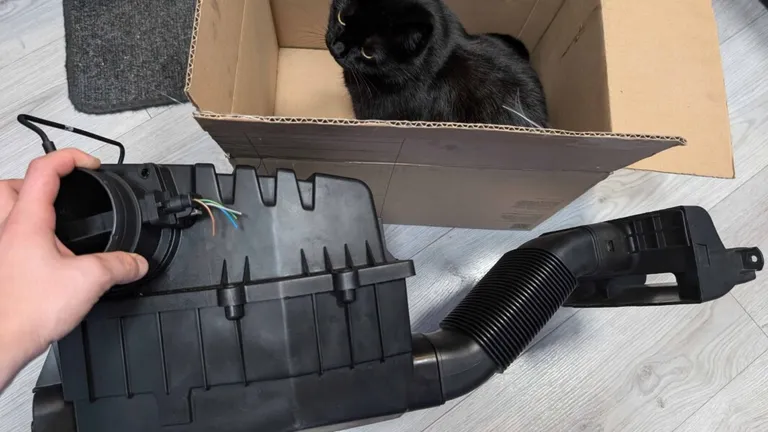
The intake system is responsible for delivering the proper amount of fresh air to the engine. In turbocharged engines, its efficiency is particularly important as it directly affects the turbocharger’s performance and engine output.
Impact of Intake Modifications on TSI Engines
Modifying the intake system in TSI engines can bring measurable benefits:
- Increased airflow translates to faster turbocharger response, reducing the “turbo lag”
- More efficient cylinder filling allows for higher boost pressure
- Lower air temperature in the intake manifold positively affects the combustion process
- Better cylinder filling enables optimization of the air-fuel mixture
TDI Engines – Is It Worth Modifying the Intake?
For TDI engines, the situation is different. Modifying the intake system rarely brings significant benefits and can even lead to problems.
How the Turbocharger Works in TDI:
- The compressor increases air pressure to a programmed value
- Once the target pressure is reached, additional airflow does not translate to power increase
- Even complete filter removal won’t result in higher boost pressure
- Increased airflow doesn’t significantly affect engine characteristics
Potential Problems:
- Sport air filters may insufficiently protect the turbocharger from dust
- Increased contamination can lead to accelerated turbine blade wear
- To maintain the target pressure, the turbine must operate at higher RPMs, increasing its stress
Interesting Quote from tdi.pl Forum
“In a turbodiesel, the compressor increases air pressure to a set value. If the flow through the filter is sufficient, the compressor won’t increase it further after reaching this pressure. This means that even after removing the air filter, we won’t achieve higher mixture pressure – thus we won’t increase power. Regardless of whether we use a sport filter or regular paper filter – we won’t see higher pressure.
However, this is a simplification. On a precise dyno, you can measure a small difference in favor of filters with lower flow resistance. This is because with greater restrictions, the turbine must work at higher RPMs to achieve the target pressure. This causes greater mechanical losses and lower system efficiency. As a result, power slightly decreases, even though the boost pressure remains the same.”
Practical Tips
- Don’t be guided solely by price – not always the most expensive and largest carbon intakes work better than factory ones – sometimes they only improve appearance
- For performance – usually improving airflow on the original filter is sufficient for power increase, or you can change just the filter element
- Most cone filters primarily change the sound, which isn’t always desirable in a civilian car
- In a Polo with 2.0 TSI EA113, you can easily achieve around 340 HP / 430Nm on the factory air filter
- With small modifications to the air supply on the factory filter box, you can exceed 400 HP (source)
- Remember that a sport air filter doesn’t filter as well as a standard filter, which can lead to turbine damage and subsequently engine damage
Conclusion
Intake system modification can bring measurable benefits in gasoline engines, especially turbocharged ones, but careful selection of solutions is key.
In most cases, optimizing the existing intake system is sufficient, for example by modifying the factory air guide and regularly replacing the filter element.
Sport filters are worth considering for motorsport applications and planned power outputs significantly exceeding 400 HP.
In the next articles, I’ll present detailed available methods for modifying the factory intake system for different VW Polo 6R/6C engine versions.